
01
Explore intake patterns
Review validated-intake trends and breakdowns, with study-type, technologist, reader and shift filters. Keep PDF arrivals distinct from reviewed intake.
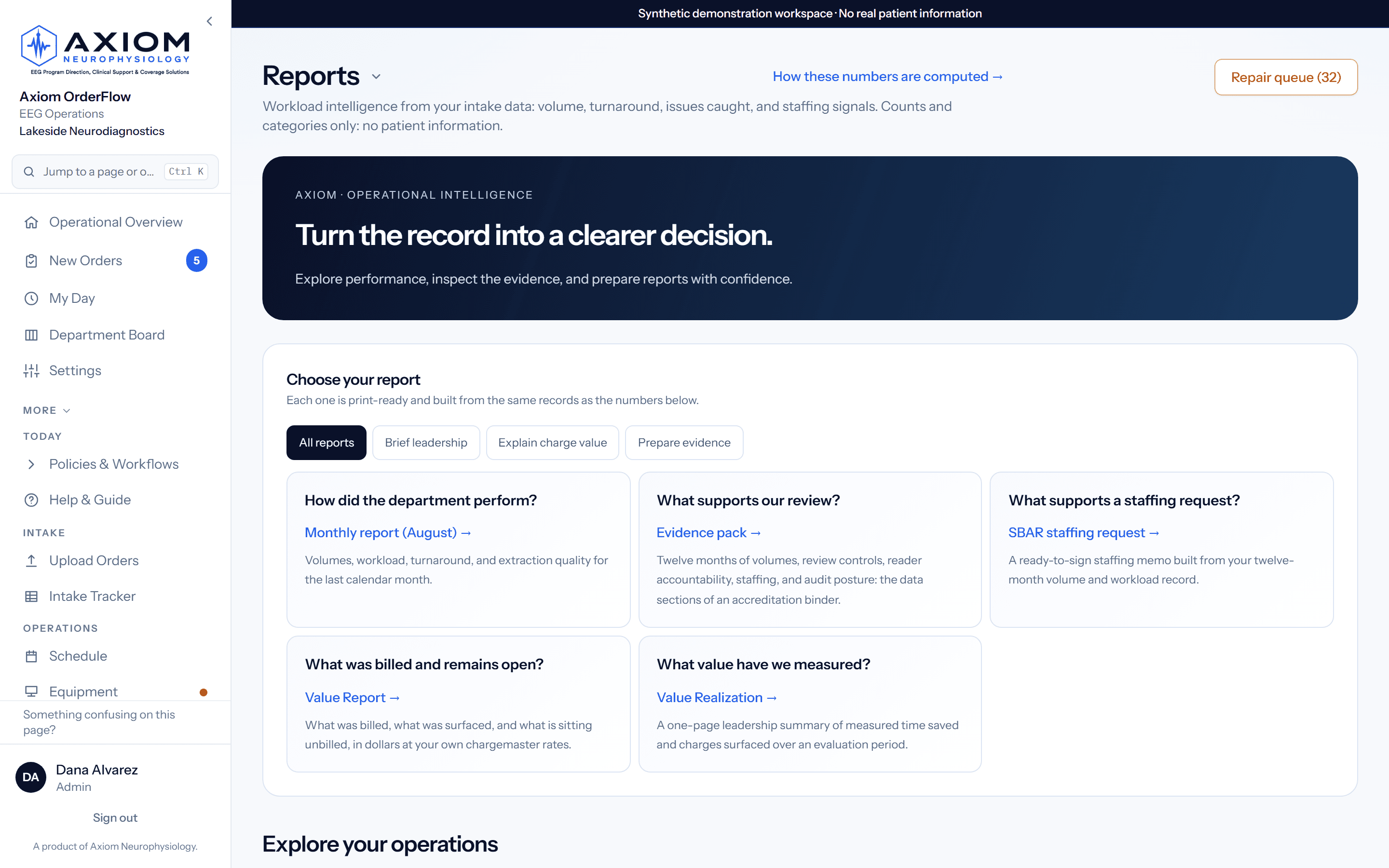
Axiom OrderFlow turns recorded EEG operations into reports for supervisors and department leaders: intake volume, completed-study workload, reader follow-up, and evidence for operational review.
Direct answer
EEG department analytics should explain what was counted, which period it belongs to, and where the evidence is incomplete. OrderFlow separates intake from study completion and current queues from period-based performance, so a report can support a specific operational decision.
Inside the product
Order PDFs received counts arrivals. Validated-intake trends describe records that passed review. Studies completed comes from the study lifecycle, not intake approval. These populations should not be combined into a single completion rate.
Ready-to-schedule and pending-reader counts describe work open now. They are not historical snapshots recreated by the report date filter. Their labels explain that distinction.
Intake review time measures receipt/upload to the reviewed row joining the tracker. Reader turnaround uses routing and read-completion timestamps. Missing, invalid or reversed read timestamps are excluded and reported; an unavailable result is not zero delay.
Manual-entry time saved is an estimate based on autofilled fields and the configured time assumption. Value reports use facility chargemaster amounts as gross charges, not payer reimbursement, collections or guaranteed revenue.
The operating problem
An intake total is presented as though every order became a completed study.
A department-wide average conceals differences between study types or reader workloads.
A report shows zero when the events needed to calculate the metric were never recorded.
Leadership receives a spreadsheet of numbers without definitions or a clear follow-up question.
Core capabilities
01
Review validated-intake trends and breakdowns, with study-type, technologist, reader and shift filters. Keep PDF arrivals distinct from reviewed intake.
02
Use study-lifecycle completion events for completed-study reporting and configured workload units. Workload units are a model, not measured hands-on minutes or a staffing prescription.
03
See pending load and oldest wait alongside completed-read turnaround. Current backlog and completed-read performance answer different questions.
04
Open monthly reports, the evidence pack, staffing-request report and value reporting. Reports organize recorded information; they do not certify compliance or guarantee a staffing or financial outcome.
Workflow
Human-reviewed. Built specifically for EEG. Designed to complement your EHR and EEG acquisition system.
For buyers
In a tailored walkthrough, ask to see the report your supervisor would use, the recorded events behind it, and how missing data appears. Confirm the reports included in your package and the workflow configuration needed to populate them.
Product boundary
These are operational reports. OrderFlow does not interpret EEG waveforms, measure diagnostic accuracy, replace the EHR, or set clinical response deadlines. A data gap is not proof of a care failure, and a favorable metric is not proof of safe staffing.
FAQ
No. This page describes department operations analytics: intake, workflow, workload, reader follow-up and reporting. Waveform acquisition and interpretation remain separate.
No. Results depend on recorded workflow events and configuration. Completed-study reporting needs lifecycle completion records; turnaround needs usable timestamps. Missing information should remain visible rather than be presented as a favorable result.
No. Some queues show current open work. Period-based intake and completion measures are distinct from those current-state counts; read each section's scope.
They can support a review, but estimates, workload assumptions and gross charges must retain their definitions. Realized savings, reimbursement and staffing decisions require facility evidence and leadership judgment.
A tailored walkthrough uses synthetic data and focuses on your department's current intake, scheduling, operations, and reporting process.
Do not include patient information in demo requests. Demo environments use synthetic data only.